
目录
作为一名C#开发者,你是否还在写着冗长的命名空间声明?是否还在用繁琐的if-else链条处理逻辑判断?随着C#语言的不断演进,许多新特性能让我们的代码变得更加简洁、可读且高效。
今天分享10个新版C#语法技巧,这些都是我在实际项目中验证过的最佳实践。仅仅通过采用文件作用域命名空间和目标类型化new表达式,我就为一个小型库减少了约200行代码,代码审查效率也显著提升。
让我们一起探索如何用现代C#写出更优雅的代码!
🔥 作用域管理:让代码层级更清晰
💎 Using声明替代Using块
传统写法的痛点: 多层嵌套导致代码右移严重,可读性差
现代解决方案:
c#// ❌ 传统写法:嵌套地狱
public async Task<string> ReadFileTraditional(string path)
{
    using (var stream = File.OpenRead(path))
    {
        using (var reader = new StreamReader(stream))
        {
            return await reader.ReadLineAsync();
        }
    }
}

// ✅ 现代写法:扁平化结构
public async Task<string> ReadFileModern(string path)
{
    using var stream = File.OpenRead(path);
    using var reader = new StreamReader(stream);
    return await reader.ReadLineAsync();
}
实战应用场景: 文件处理、数据库连接、HTTP请求等需要资源管理的场景
避坑提醒: using声明的生命周期到方法结束,确保资源在正确时机释放
🎯 文件作用域命名空间(C# 10+)
解决的问题: 减少不必要的缩进,让代码结构更清晰,这个namespace确实有好处。
c#// ❌ 传统写法
namespace MyApp.Models
{
    public sealed record UserId(Guid Value);

    public class UserService
    {
        // 所有代码都要缩进
    }
}

// ✅ 新版写法
namespace MyApp.Models;

public sealed record UserId(Guid Value);

public class UserService
{
    // 代码不需要额外缩进
}
🎨 类型推断:减少冗余代码
⚡ 目标类型化new表达式
核心价值: 当类型显而易见时,消除重复声明,现在C#在这条路上跑的飞起了。。。
c#// ❌ 冗余写法
Dictionary<string, List<UserInfo>> userGroups = new Dictionary<string, List<UserInfo>>();
List<ComplexBusinessObject> items = new List<ComplexBusinessObject>();

// ✅ 简洁写法
Dictionary<string, List<UserInfo>> userGroups = new();
List<ComplexBusinessObject> items = new();

// 🔥 集合表达式(C# 12)- 更进一步
int[] primeNumbers = [2, 3, 5, 7, 11, 13];
List<string> colors = ["red", "green", "blue"];
最佳实践:在返回类型明确的方法中使用效果最佳
🛡️ 不可变性:数据安全的现代方案
🔒 Record类型的with表达式
解决的核心问题: 安全地创建对象副本,避免意外修改,with这语法我一直不习惯,估计早些年vb中的with影响。
c#public record UserProfile(string Name, int Age, string Email);

// ❌ 传统做法:容易出错
public UserProfile UpdateAge(UserProfile user, int newAge)
{
    return new UserProfile(user.Name, newAge, user.Email); // 容易遗漏字段
}

// ✅ 新版本做法:安全且直观
public UserProfile UpdateAge(UserProfile user, int newAge)
{
    return user with { Age = newAge }; // 只修改需要的字段
}

// 🎯 实际应用示例
var originalUser = new UserProfile("张三", 25, "zhang@example.com");
var updatedUser = originalUser with { Age = 26, Email = "zhang.new@example.com" };
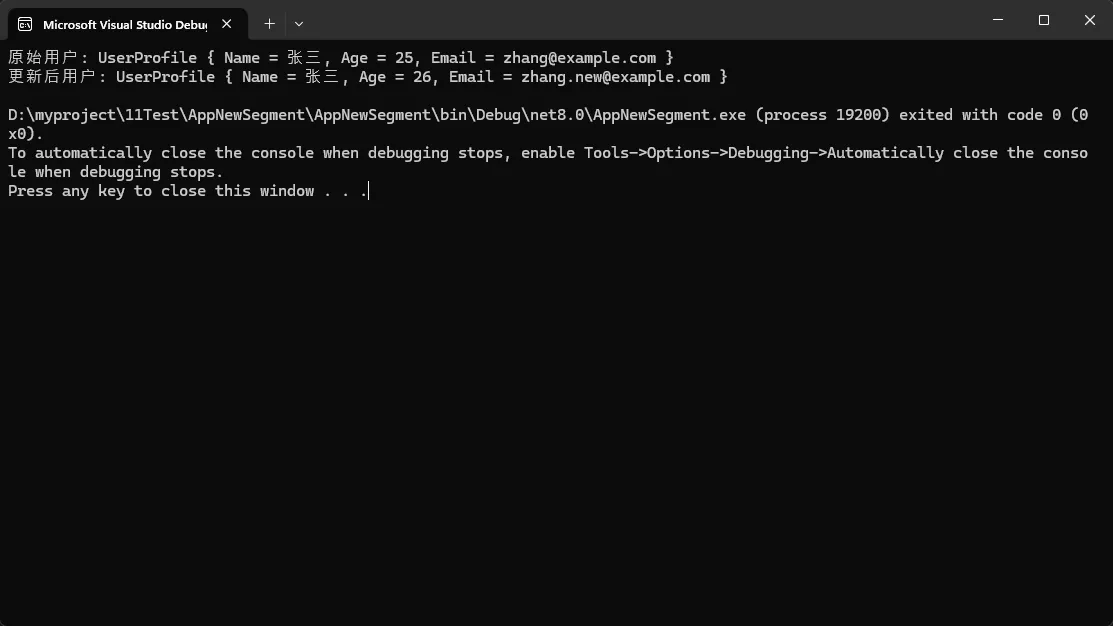
项目实战:在状态管理、配置更新等场景中极其有用,这个写法实际意义非常大
💪 只读结构体:值类型的最佳实践
c#// ✅ 避免意外的值复制和修改
public readonly record struct Money(decimal Amount, string Currency)
{
    public Money Add(Money other)
    {
        if (Currency != other.Currency)
            throw new InvalidOperationException("货币类型不匹配");

        return this with { Amount = Amount + other.Amount };
    }
}

internal class Program
{
    static void Main(string[] args)
    {
        // 使用示例
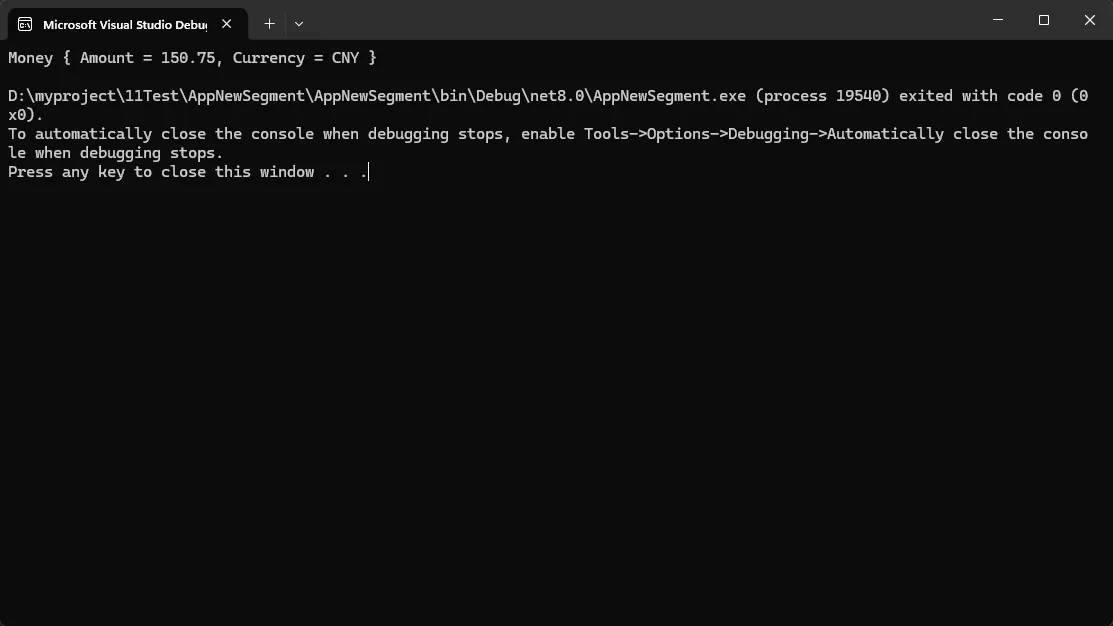
        var price1 = new Money(100.50m, "CNY");
        var price2 = new Money(50.25m, "CNY");
        var total = price1.Add(price2); // 安全的计算
        Console.WriteLine(total);
    }
}
⚡ 条件逻辑:告别if-else链条
🎯 Switch表达式:函数式编程的力量
c#public enum LogLevel
{
    Debug,
    Info,
    Warning,
    Error,
    Information,
    Trace
}

// ❌ 传统if-else链条
public string GetLogLevelEmoji(LogLevel level)
{
    if (level == LogLevel.Trace) return "·";
    if (level == LogLevel.Debug) return "•";
    if (level == LogLevel.Information) return "ℹ️";
    if (level == LogLevel.Warning) return "⚠️";
    if (level == LogLevel.Error) return "❌";
    return "❓";
}

// ✅ 现代switch表达式
public string GetLogLevelEmoji(LogLevel level) => level switch
{
    LogLevel.Trace => "·",
    LogLevel.Debug => "•",
    LogLevel.Information => "ℹ️",
    LogLevel.Warning => "⚠️",
    LogLevel.Error => "❌",
    _ => "❓"
};

public class Customer
{
    public CustomerLevel Level { get; set; }
}

public enum CustomerLevel
{
    VIP,
    Premium
}

// 🔥 更复杂的模式匹配
public decimal CalculateDiscount(Customer customer, decimal amount) => (customer.Level, amount) switch
{
    (CustomerLevel.VIP, > 1000) => amount * 0.2m,
    (CustomerLevel.VIP, _) => amount * 0.1m,
    (CustomerLevel.Premium, > 500) => amount * 0.15m,
    (CustomerLevel.Premium, _) => amount * 0.05m,
    _ => 0m
};
注意:这个写法相当有用,以前要这么写我用的是一个三方库,简单理解一下 "_",就是else
🛡️ 模式匹配:更安全的null检查
c#// ❌ 传统null检查
if (user != null && user.Profile != null)
{
    ProcessUser(user);
}

// ✅ 现代模式匹配
if (user is not null)
{
    ProcessUser(user);
}

// 🎯 更强大的模式匹配
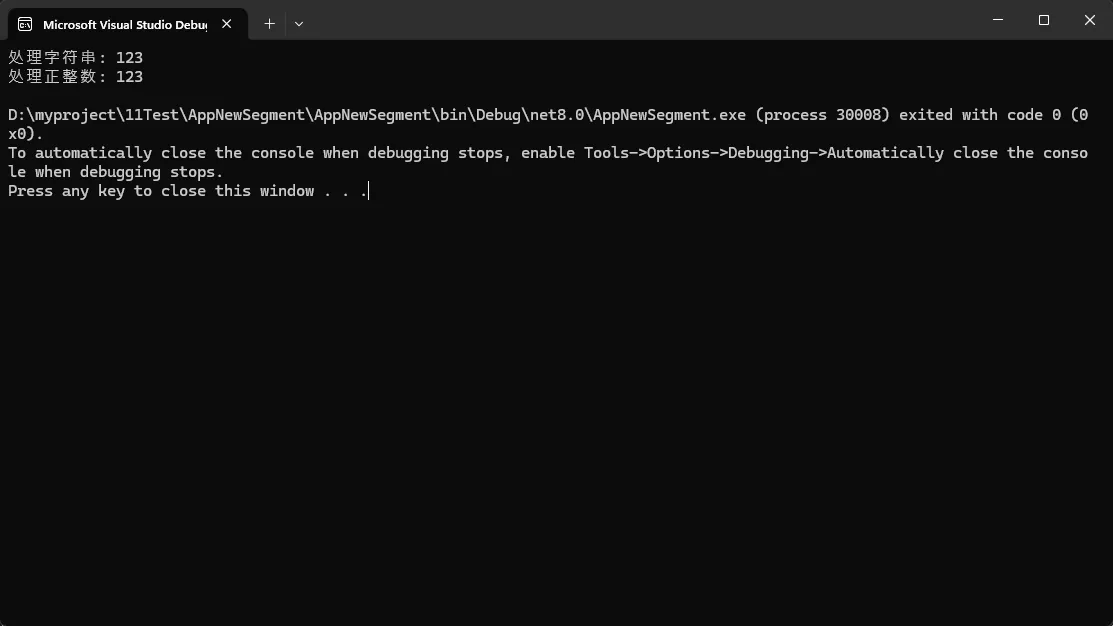
public string ProcessData(object data) => data switch
{
    string s when s.Length > 0 => $"处理字符串: {s}",
    int i when i > 0 => $"处理正整数: {i}",
    List<string> list => $"处理列表,包含{list.Count}个元素",
    null => "数据为空",
    _ => "未知数据类型"
};
🏗️ 类型构造:简化对象创建
⚡ 主构造函数(C# 12)
适用场景: 简单的依赖注入类、数据传输对象
c#// ❌ 传统写法:样板代码多
public class OrderService
{
    private readonly ILogger<OrderService> _logger;
    private readonly IOrderRepository _repository;

    public OrderService(ILogger<OrderService> logger, IOrderRepository repository)
    {
        _logger = logger;
        _repository = repository;
    }
}

// ✅ 现代写法:简洁明了
public class OrderService(ILogger<OrderService> logger, IOrderRepository repository)
{
    public async Task<Order> CreateOrderAsync(CreateOrderRequest request)
    {
        logger.LogInformation("创建订单: {OrderId}", request.Id);
        return await repository.CreateAsync(request);
    }
}
注意:在实际业务中这块我还是不习惯,可以习惯了class本身应是一个name
🔧 必需成员(C# 11)
解决问题: 确保对象初始化时必要属性不被遗漏
c#public sealed class ApiConfiguration
{
    public required string BaseUrl { get; init; }
    public required string ApiKey { get; init; }
    public int TimeoutSeconds { get; init; } = 30;
    public bool EnableRetry { get; init; } = true;
}

// ✅ 编译器强制要求设置必需属性
var config = new ApiConfiguration
{
    BaseUrl = "https://api.example.com", // 必须设置
    ApiKey = "your-api-key", // 必须设置
    TimeoutSeconds = 60 // 可选设置
};
注意:这个有不少好处,在编辑时就会提示
🎯 实战总结
通过采用这些现代C#语法特性,你的代码将获得:
🚀 可读性提升: 减少样板代码,突出业务逻辑
🛡️ 安全性增强: 编译时检查,减少运行时错误
⚡ 开发效率: 更少的代码量,更快的开发速度
这些特性不仅仅是语法糖,它们体现了C#语言设计的核心理念:让开发者专注于业务逻辑而非语言细节。在我的实际项目中,这些改进让代码审查变得更加高效,新团队成员的上手速度也明显提升。
你在项目中最常用哪些现代C#特性? 在使用这些语法时遇到过什么有趣的场景或坑点吗?欢迎在评论区分享你的经验!
觉得这些技巧有用?请转发给更多C#同行,一起写出更优雅的代码! 🚀


本文作者:技术老小子
本文链接:
版权声明:本博客所有文章除特别声明外,均采用 BY-NC-SA 许可协议。转载请注明出处!